The robot enforces the plan. The surgeon makes the decisions.
In a single-implant case a small deviation is usually recoverable. In an arch carried by four or six implants, the implants have to be correct as a set: their axes must converge on a prosthesis that does not yet exist, distribute load across a span, and clear the nerve and the sinus at the same time.
Five stages, from data capture to verified fit
-
Data capture
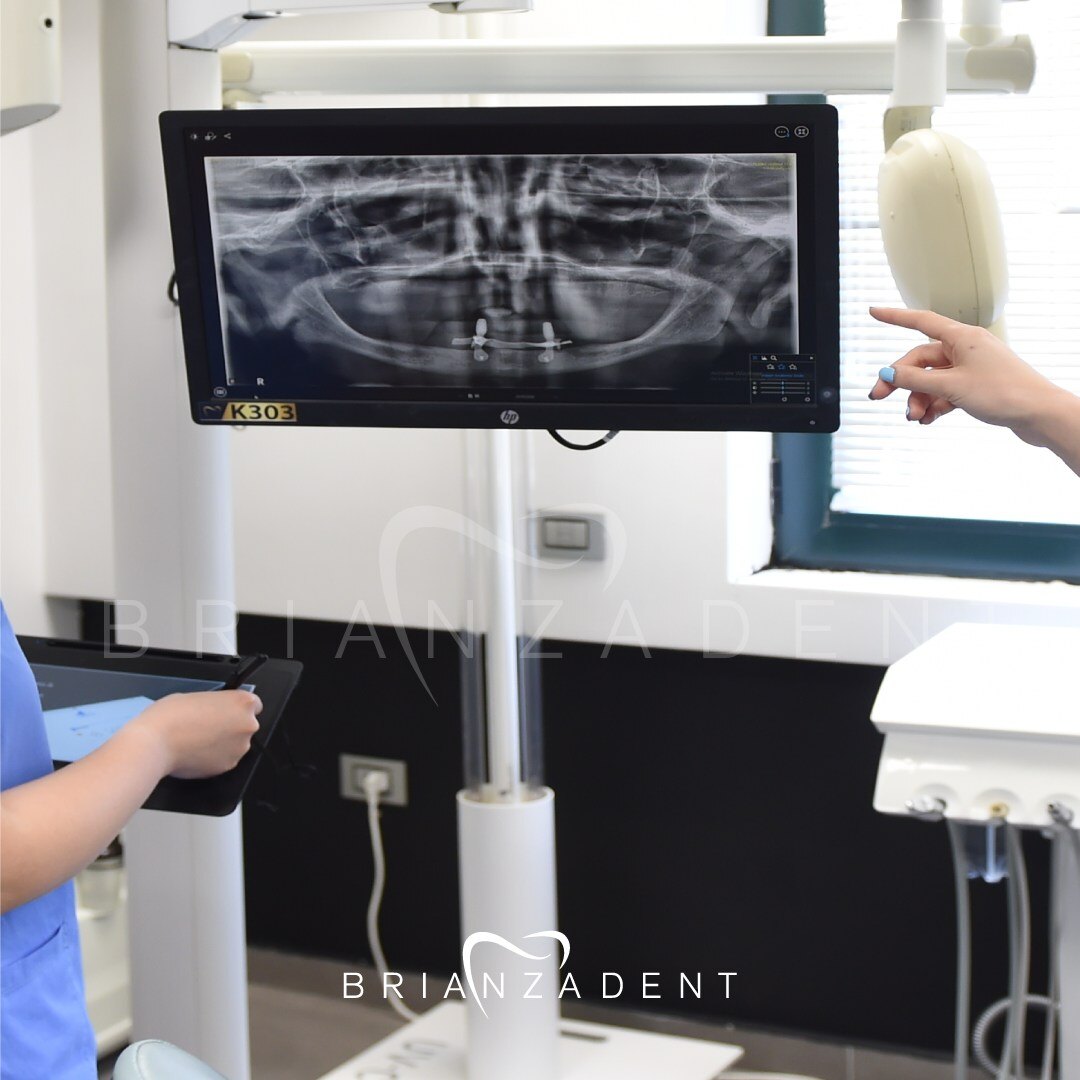
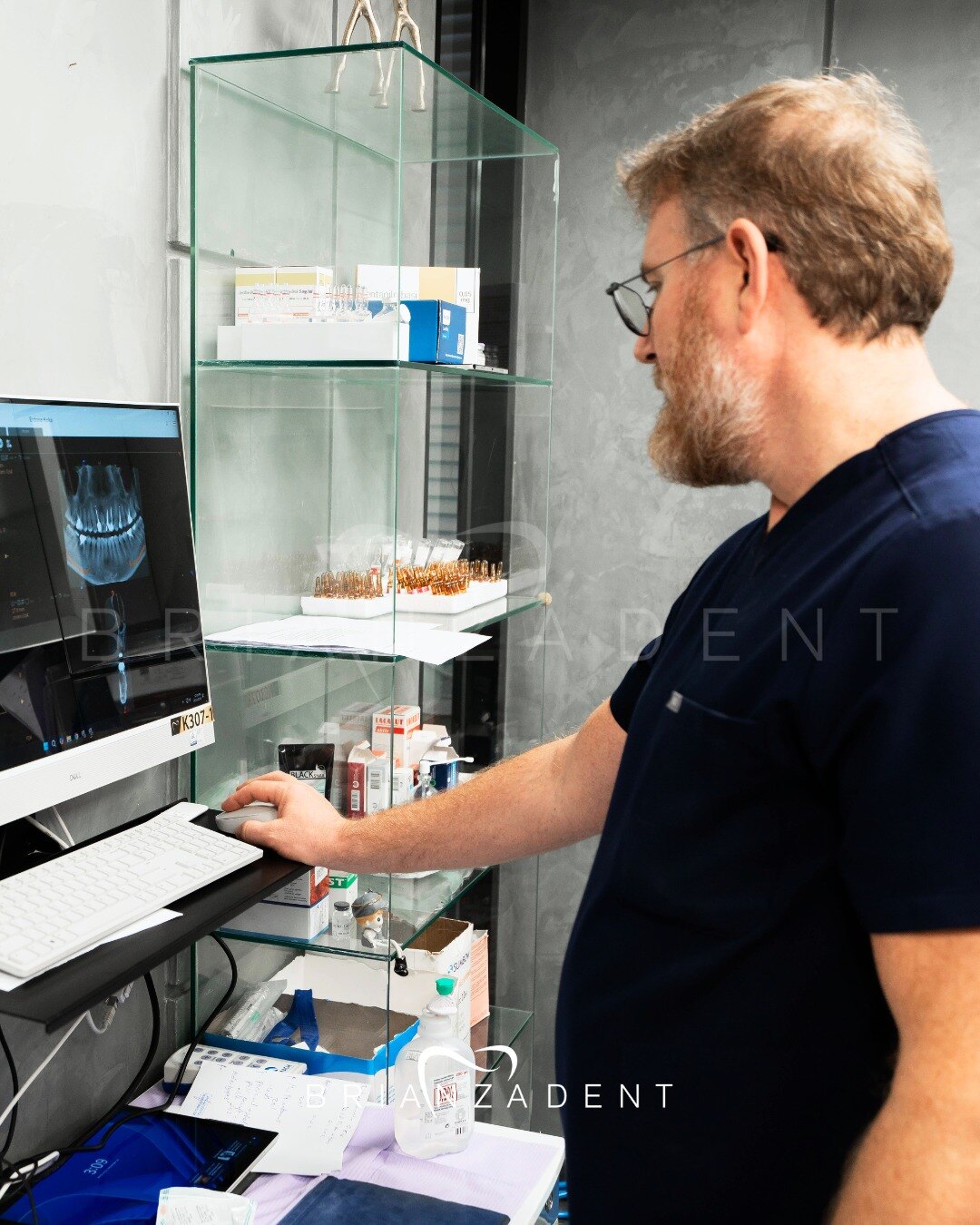
A 3D CT scan (CBCT) and an intraoral scan are taken in the clinic. With 3D RAYFace, artificial intelligence automatically aligns the intraoral scan with the CT data and generates a “Dental Avatar” of the patient in seconds — Brianza Dent is among the first in Albania to work with this technology.
-
Digital positioning of every implant
On that model, each implant is placed virtually: angulation, depth, emergence, distance from the maxillary sinus, the mandibular nerve and adjacent roots, and the bone volume actually available. For an angulated full-arch protocol, this is where the case is won or lost.
-
Prosthetically driven verification
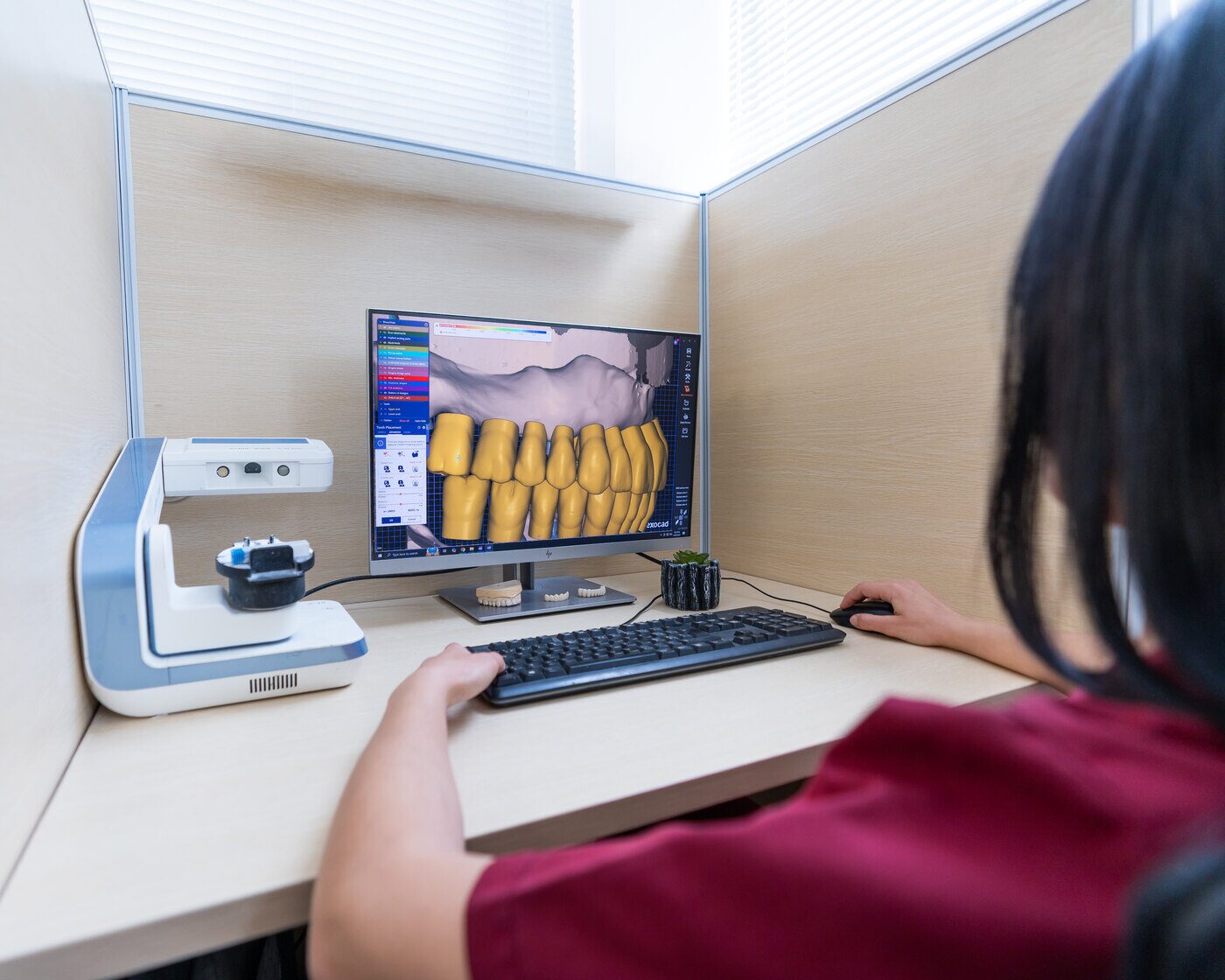
The plan is checked against the intended final arch — MODJAW for real-time 4D jaw motion, Digital Smile Design for the aesthetic result — so implants are placed to serve the planned teeth rather than the teeth being improvised around the implants.
-
Robotically guided execution
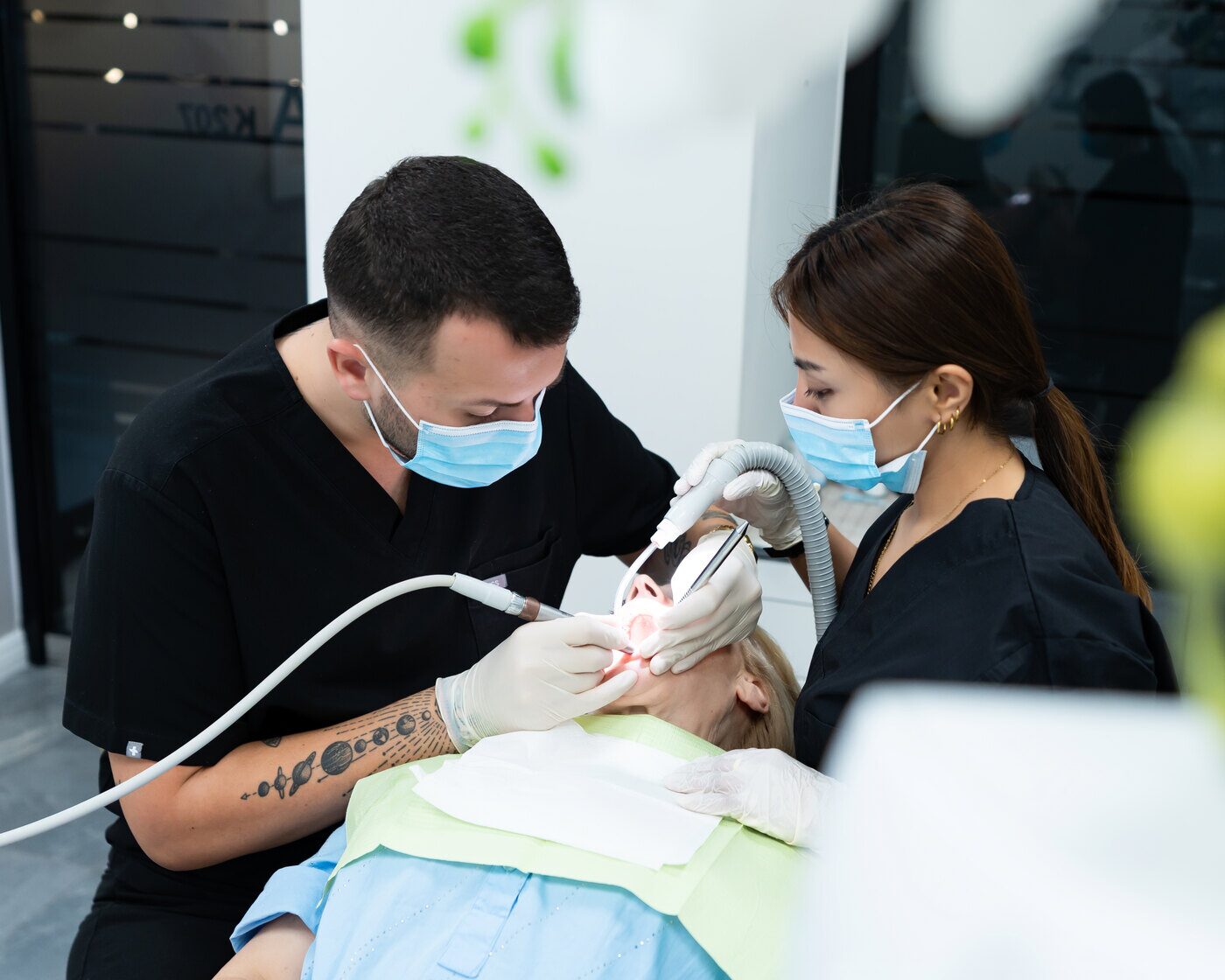
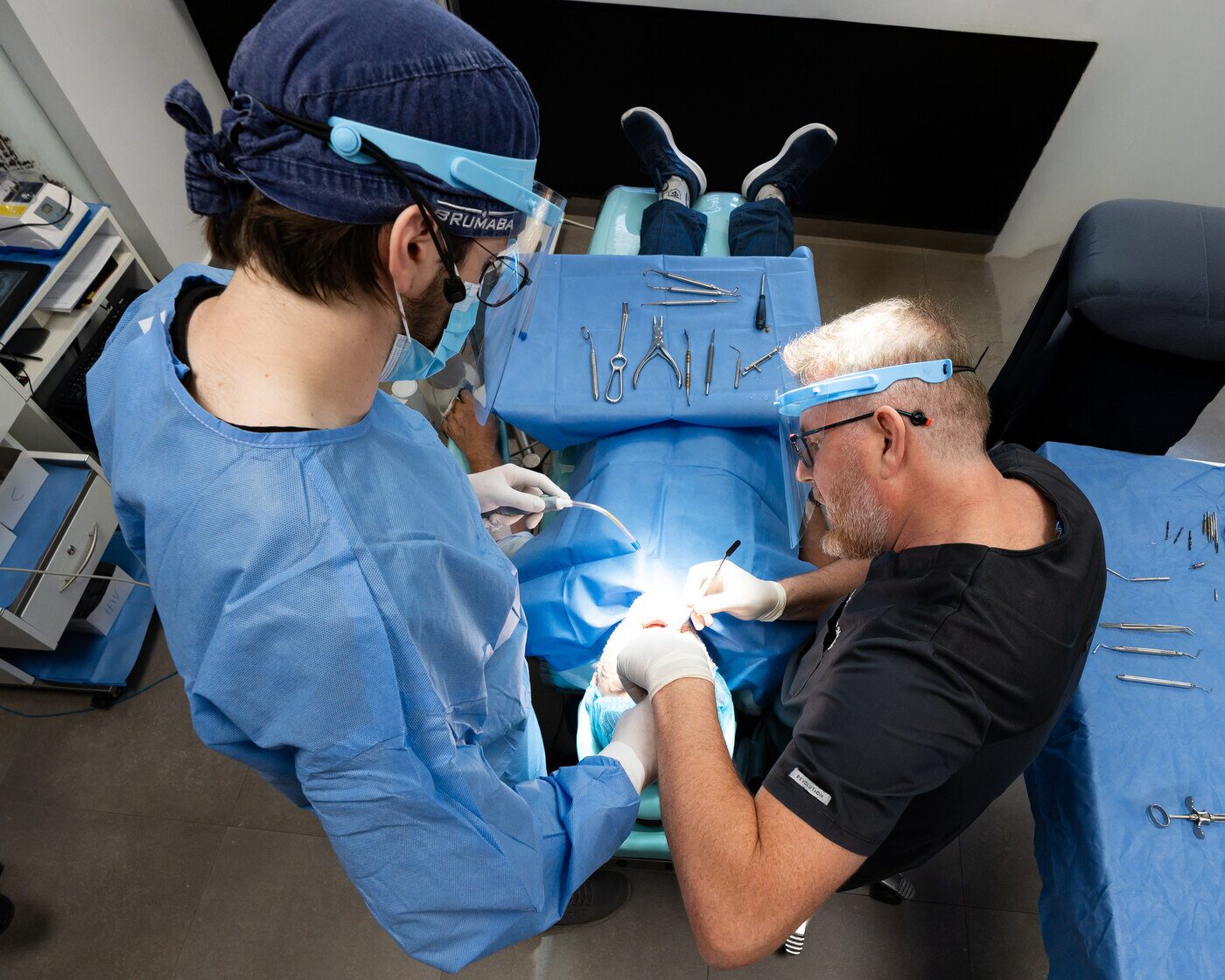
During surgery the robotic system tracks the patient’s jaw and holds the drilling axis, depth and angle to the approved plan, correcting for movement in real time. Clinical decisions remain with the surgeon throughout.
-
Verification of the result
Multi-implant cases are recorded with PIC Dental, a digital impression technique dedicated exclusively to multiple implant restorations, accurate to 4 microns and validated in more than 18 peer-reviewed studies. A full arch that is passively seated is a full arch that lasts.
A plan that is enforced continuously
Freehand placement depends on the surgeon transferring a mental plan onto a moving patient in a confined field. Static surgical guides help, but they are manufactured in advance and cannot adapt during the operation. Robotic guidance addresses the same problem differently: the plan is enforced continuously, and deviation from it is physically restricted.
Clinically, the reasons a team invests in this are the reasons that matter to a patient facing a large case: keeping a safe margin from the inferior alveolar nerve and the sinus floor, placing implants in the axes the prosthesis needs, working with smaller flaps where the case allows, and keeping multi-implant geometry consistent across the arch.
What that means for any individual patient depends on their anatomy, bone quality and general health, and is discussed case by case. Outcomes are never guaranteed in advance.
Ask whether your case suits guided placement
Send your CT scan and the team will tell you what the 3D data allows before you commit to anything.
Each item removes a specific source of error
In diagnosis, in surgical execution, in the fit of a full arch, or in recovery. The equipment below is not listed for its own sake.
In-house dental laboratory
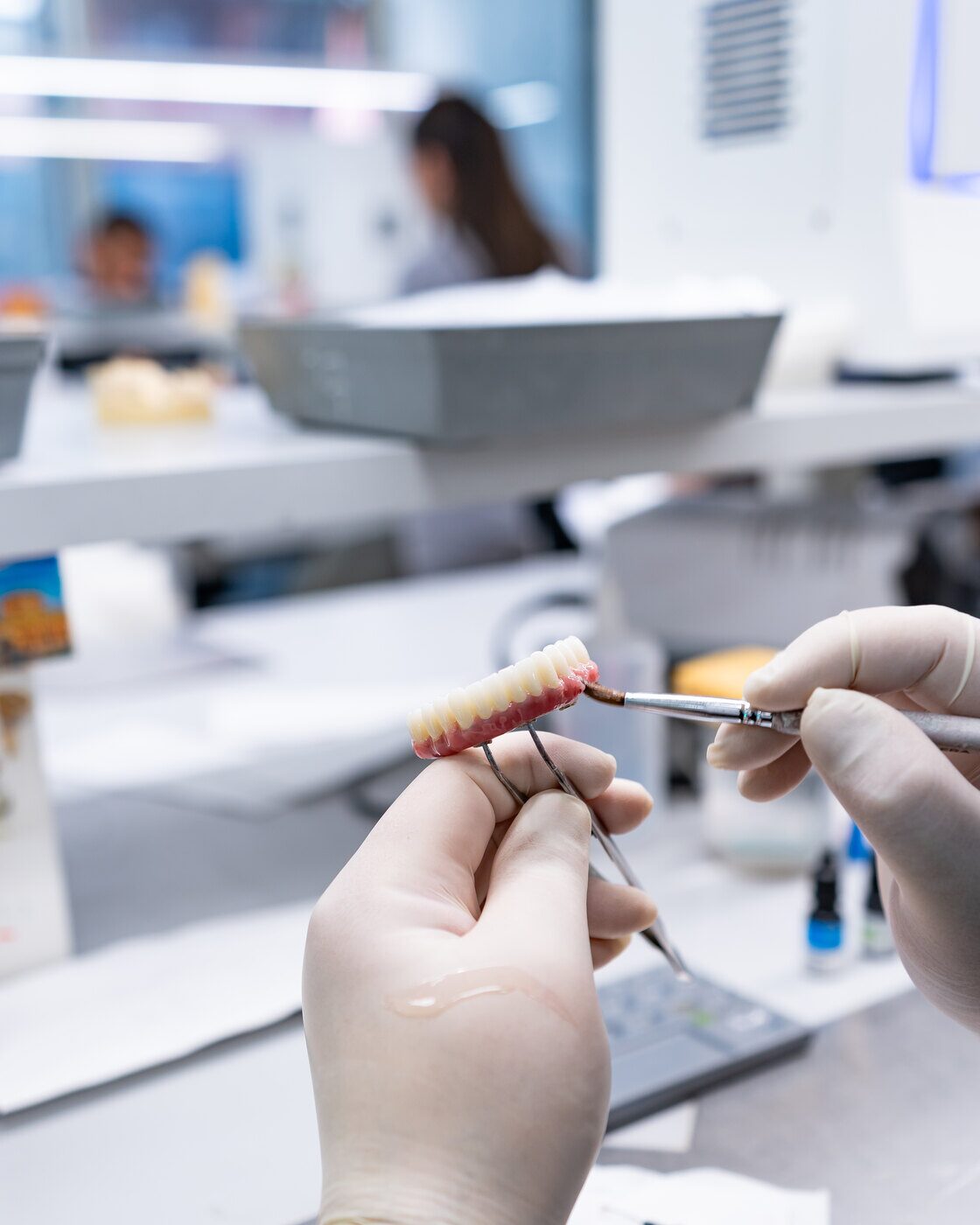
Prosthetic work is produced in the clinic’s own laboratory, which shortens the loop between surgeon, technician and patient and allows a full arch to be adjusted the same day instead of the following week — decisive when the patient’s stay is counted in days.
- Zirkonzahn — metal-free restorations in high-quality zirconia, fully digital design and production
- iMES iCORE CORITEC one+ — simultaneous 5-axis milling for block and disc work
- EOS laser 3D printing — additive manufacture of bridges, crowns and frameworks
- CAD/CAM across the workflow, from digital impression to finished restoration
-
Diagnostics and surgical planning
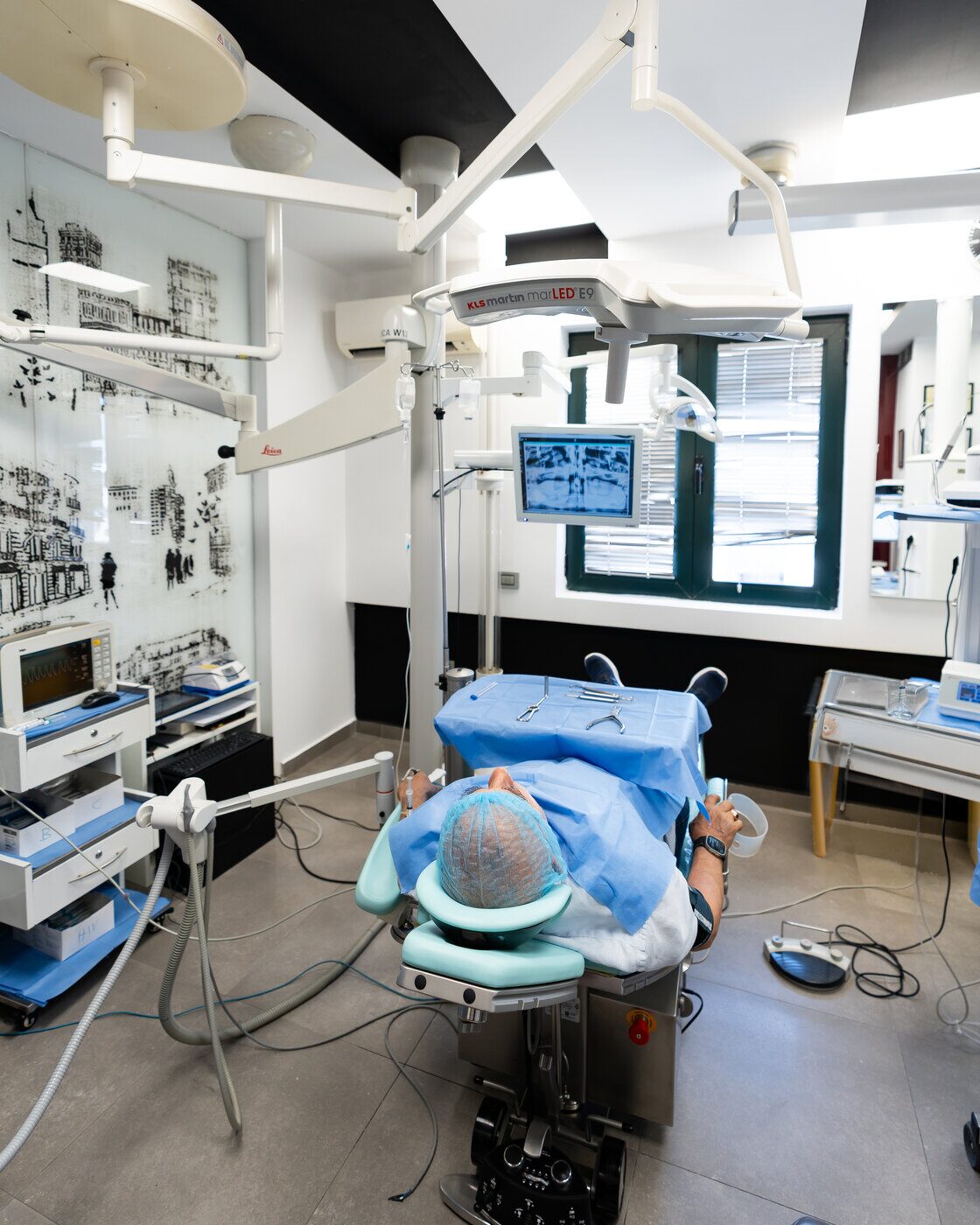
3D dental CT (CBCT) for bone volume and density, sinus anatomy and nerve position — nothing about a full-arch case is decided without it. 3D RAYFace for AI fusion of intraoral scan and CT. MODJAW for real-time 4D recording of jaw movement on a 21-inch screen. Digital Smile Design, the protocol developed by Dr. Christian Coachman, for design, planning and execution.
-
Impressions and verification
Intraoral scanning (ZFX, oral scan) produces digital impressions without impression material, feeding directly into CAD design. PIC Dental, dedicated to multi-implant restorations and accurate to 4 microns, verifies the fit. A full arch built on an inaccurate impression transfers stress to the implants.
-
Biochemical laboratory
A modern biochemical laboratory operates inside the structure, with current-generation equipment and specialised medical staff, covering the patient before, during and after surgery. For someone who has flown in with a fixed return date, that is the difference between treatment proceeding and treatment being postponed.
-
Anaesthesia, sedation and monitored recovery
With an anaesthesiologist on the team, extensive surgery — multiple extractions, grafting and a full arch of implants — can be completed in a single planned session, with the patient monitored during and afterwards. It is also how patients with severe dental anxiety or a strong gag reflex become treatable at all. Suitability is decided by the anaesthesiologist after a medical assessment and blood work, not on request.
-
Hyperbaric oxygen capsule
Brianza Dent operates a hyperbaric oxygen capsule — the only one in a dental clinic in the country. Pure oxygen at raised pressure is used to support recovery after surgery and implant placement, and is particularly relevant for patients with diabetes and other chronic conditions. After extensive surgery it is prescribed case by case as part of the post-operative protocol.
-
The Privé Zone
A separate area for patients who want privacy and an unhurried appointment — quiet surroundings, a dedicated team, and a schedule built around one patient rather than a waiting list. Most full-arch patients are treated here.
Ask whether your case suits guided placement
Send your CT scan or panoramic X-ray. The team will tell you what your 3D data allows — which protocol, how many implants, and whether robotic guidance changes anything for your anatomy.
- A panoramic X-ray — or a CBCT scan if you already have one
- Photographs of your smile, front and side
- A short description of your situation and medical history
No charge and no obligation for the initial review. Enquiries are handled in English, Italian, Greek and Spanish. Prefer to talk? +355 68 418 5084 · Message us on WhatsApp
Ask which of these your plan will involve
Send your CT scan or panoramic X-ray and the surgical team will tell you which protocol, which technology and how many days your case actually requires.